
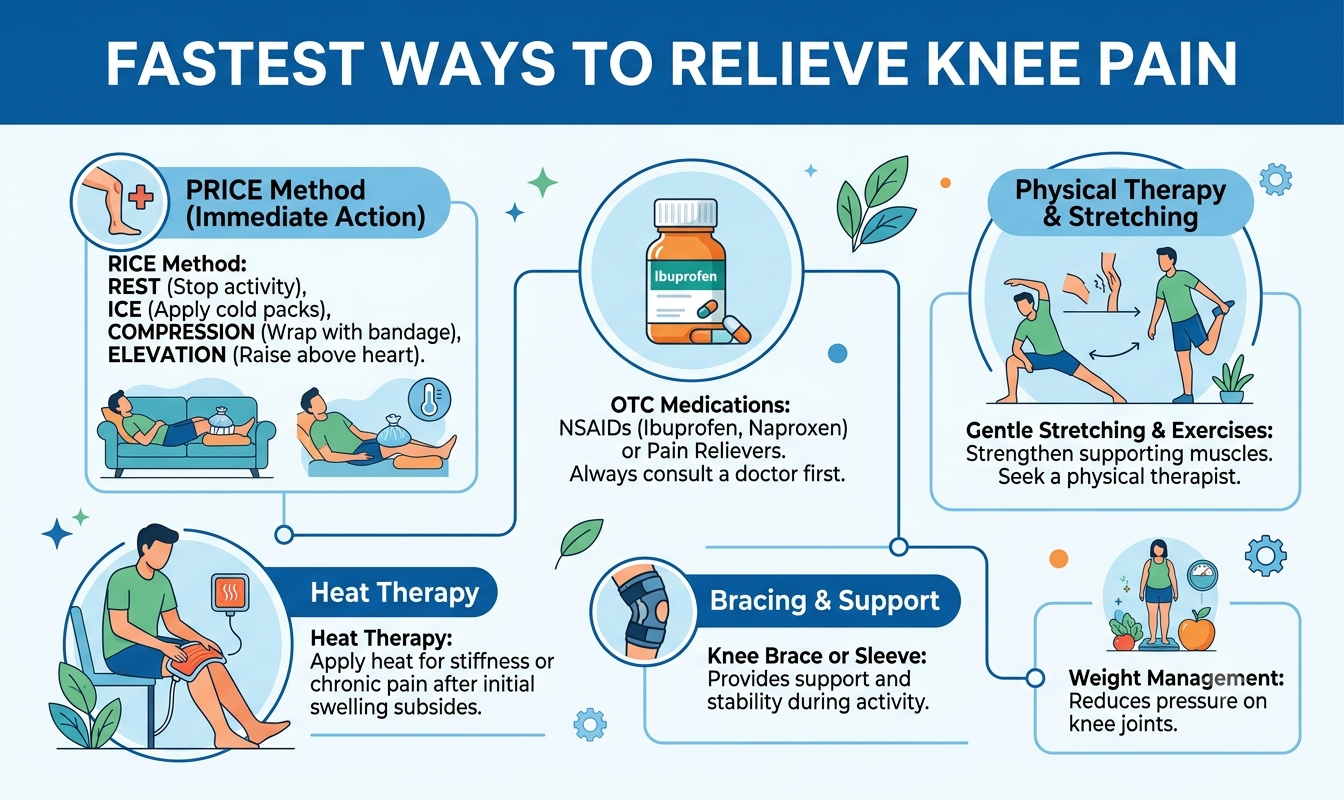
Knee pain can make simple activities such as walking, climbing stairs, or sitting uncomfortable. The fastest way to relieve knee pain depends on its cause and severity. Mild pain caused by overuse may improve with rest and simple home care, while pain from an injury, arthritis, or another condition may require medical attention.
Rest and Reduce Pressure on the Knee
One of the quickest ways to ease mild knee discomfort is to stop activities that increase the pain. Give your knee adequate rest and avoid running, jumping, squatting, or prolonged standing for a short period. Reducing pressure allows irritated tissues to recover.
Use Ice for Recent Pain and Swelling
If knee pain develops after exercise, a minor injury, or increased physical activity, applying a cold pack can help reduce swelling and discomfort. Wrap the ice pack in a thin towel and apply it for around 15 to 20 minutes at a time. Avoid placing ice directly on the skin.
Elevate the Leg
Keeping the affected leg raised can help reduce swelling, particularly after an injury. When resting, place your leg on a cushion so that the knee is comfortably elevated. This can be especially useful when swelling is noticeable around the joint.
Try Gentle Movement
Complete inactivity may make the knee feel stiff. Once severe pain or swelling has settled, gentle movements and low-impact activities such as walking or light stretching may help maintain flexibility. Avoid movements that worsen your symptoms.
Consider Pain Relief Options
Over-the-counter pain-relieving medicines may provide temporary relief for some people. However, they may not be suitable for everyone, especially people with certain medical conditions or those taking other medicines. It is better to speak with a healthcare professional before using them regularly.
When Should You Seek Medical Care?
Knee pain that is severe, persistent, or associated with significant swelling should not be ignored. Medical evaluation is particularly important if you cannot put weight on the leg, the knee appears deformed, or the pain follows a significant injury. A healthcare professional can identify the underlying cause and recommend suitable treatment.
The fastest relief is not always about treating the pain alone. Identifying what is causing the knee problem is important for lasting improvement. Proper assessment can help determine whether rest, physiotherapy, medicines, lifestyle changes, or another treatment is appropriate.
Frequently Asked Questions
- What is the fastest home remedy for knee pain?
Resting the knee, applying a cold pack for 15–20 minutes, and keeping the leg elevated can provide temporary relief from mild pain and swelling caused by overuse or minor injury.
- Does ice help knee pain?
Yes, ice can help reduce swelling and numb discomfort after a minor injury or physical activity. Use a wrapped cold pack for 15–20 minutes rather than applying ice directly to the skin.
- Should I walk with knee pain?
Gentle walking may be suitable for mild pain if it does not worsen your symptoms. Avoid strenuous activity, running, or movements that increase pain until the knee feels better.
- How long does mild knee pain usually last?
Mild knee pain from overuse or a minor strain may improve within a few days with appropriate rest and care. Persistent or worsening pain may require professional assessment.
- Is heat or ice better for knee pain?
Ice is generally useful for recent pain and swelling, while heat may help stiffness and muscle tightness. The better option depends on the cause and timing of your symptoms.
- When is knee pain considered serious?
Knee pain needs prompt medical attention when it follows a major injury or comes with severe swelling, inability to bear weight, visible deformity, or intense and persistent discomfort.
- Can stretching help knee pain?
Gentle stretching may improve flexibility and reduce stiffness in some cases. However, stretching should not cause sharp or increasing pain, particularly after an acute knee injury.